
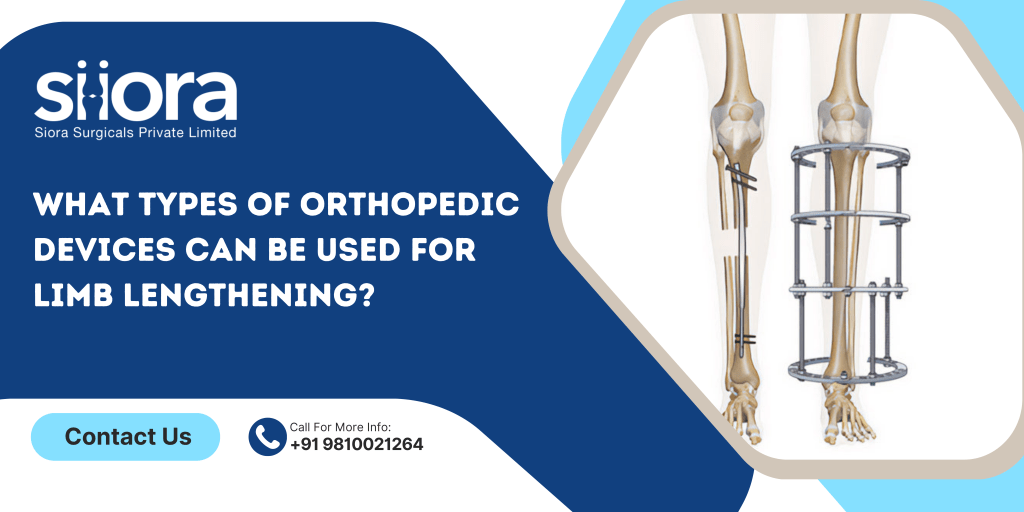
Limb lengthening is a sophisticated medical procedure designed to address discrepancies in limb length, often caused by congenital conditions, trauma, or diseases. It involves gradually lengthening bones and soft tissues to achieve symmetry and improve functionality. The process relies heavily on specialized orthopedic devices, each tailored to meet unique patient needs and medical goals. Let’s explore the types of orthopedic devices commonly used in limb lengthening procedures along with the devices used.
External Fixators
External fixators are among the most widely used devices in limb lengthening. These devices are attached externally to the affected limb using pins and wires inserted into the bone. Through controlled adjustments, the fixator gradually separates the bone segments, allowing new bone tissue to form in the gap. There are several types of external fixators:
- Circular Fixators: Devices like the Ilizarov apparatus are composed of rings connected by rods. These allow for multi-directional adjustments and are particularly effective for complex deformities or angular corrections.
- Monolateral Fixators: These are simpler, single-plane devices positioned on one side of the limb. They are often used for straightforward lengthening cases.
- Hexapod Systems: Advanced systems like the Taylor Spatial Frame combine computer technology with precise mechanics, enabling highly customizable adjustments.
External fixators are versatile and effective, but they require meticulous care to prevent infections at the pin sites and ensure successful outcomes.
Internal Lengthening Nails
Internal lengthening nails represent a more modern approach to limb lengthening. These devices are implanted directly into the bone, eliminating the need for external components. Internal nails work using a motorized or mechanical system activated externally, usually with a magnetic remote control with some brands.
Internal nails are preferred for their reduced risk of infection, improved patient comfort, and shorter recovery times. However, they are generally more expensive and may not be suitable for all cases.
Hybrid Devices
Hybrid devices combine features of both external and internal systems, aiming to optimize outcomes and patient experience. For instance, some systems use external fixators for initial stabilization, followed by internal nails for lengthening. This approach minimizes the time a patient spends with an external device while maintaining precision and effectiveness.
Bone Grafts and Plates
While not typically used for lengthening alone, bone grafts and plates can complement other devices to enhance stability and promote healing. Plates and screws are often used to stabilize the bone after the desired length is achieved, especially in cases involving fractures or poor bone quality.
Customized Solutions
In some cases, custom-designed devices are necessary. These are tailored to address unique challenges, such as complex deformities, severe bone loss, or other anatomical considerations. Advances in 3D printing technology have enabled the creation of highly specialized devices that improve precision and outcomes.
Key Considerations in Device Selection
Choosing the right orthopedic device for limb lengthening involves several factors:
- Patient’s Age and Health: Younger patients with growing bones may respond differently to treatment compared to adults.
- Severity of Limb Discrepancy: Larger discrepancies may require more robust or complex devices.
- Lifestyle and Preferences: Internal nails are often preferred by patients seeking a discreet option, while external fixators may be necessary for intricate corrections.
- Cost and Accessibility: Internal systems can be costlier, which may influence the choice of device.
The Role of Technology and Innovation
Technological advancements have revolutionized limb lengthening procedures. Devices now incorporate imaging, computer modeling, and robotics to ensure precise planning and execution. These innovations reduce risks, enhance patient comfort, and improve overall outcomes.
Conclusion
Orthopedic devices for limb lengthening have come a long way, offering a range of options to meet diverse patient needs. From traditional external fixators to cutting-edge internal nails, each device plays a vital role in transforming lives. With continued advancements in technology, the future of limb lengthening holds even greater promise, enabling patients to achieve improved mobility and quality of life.
To get an international range of external fixator systems and other trauma implants, look for experienced Orthopedic Device Companies.
 Siora Surgicals